What ceramic protection is (and what it is not)
By Mattlali · 2026-05-08
Ceramic protection is one of the most requested services in modern detailing, and also one of the most misunderstood. There is a lot of marketing hype around "ceramic." It is worth separating what it actually does from what it does not.
What it really is
A professional-grade ceramic coating is a liquid layer of silica (SiO₂) that, once cured, bonds chemically to the paint’s clear coat and forms a high-hardness surface, typically referred to as 9H. It is not a wax or a temporary sealant: wax lasts weeks, while a properly applied coating lasts years depending on the product and care.
What it does
The most visible benefit is hydrophobicity: water beads up and rolls off on its own, carrying dust and dirt with it. That makes washes faster, less frequent and gentler. It also protects against UV rays, insect residue, sap and contaminants that would otherwise stick and stain the paint, and it enhances the depth and gloss of the color.
What it does NOT do (the myths)
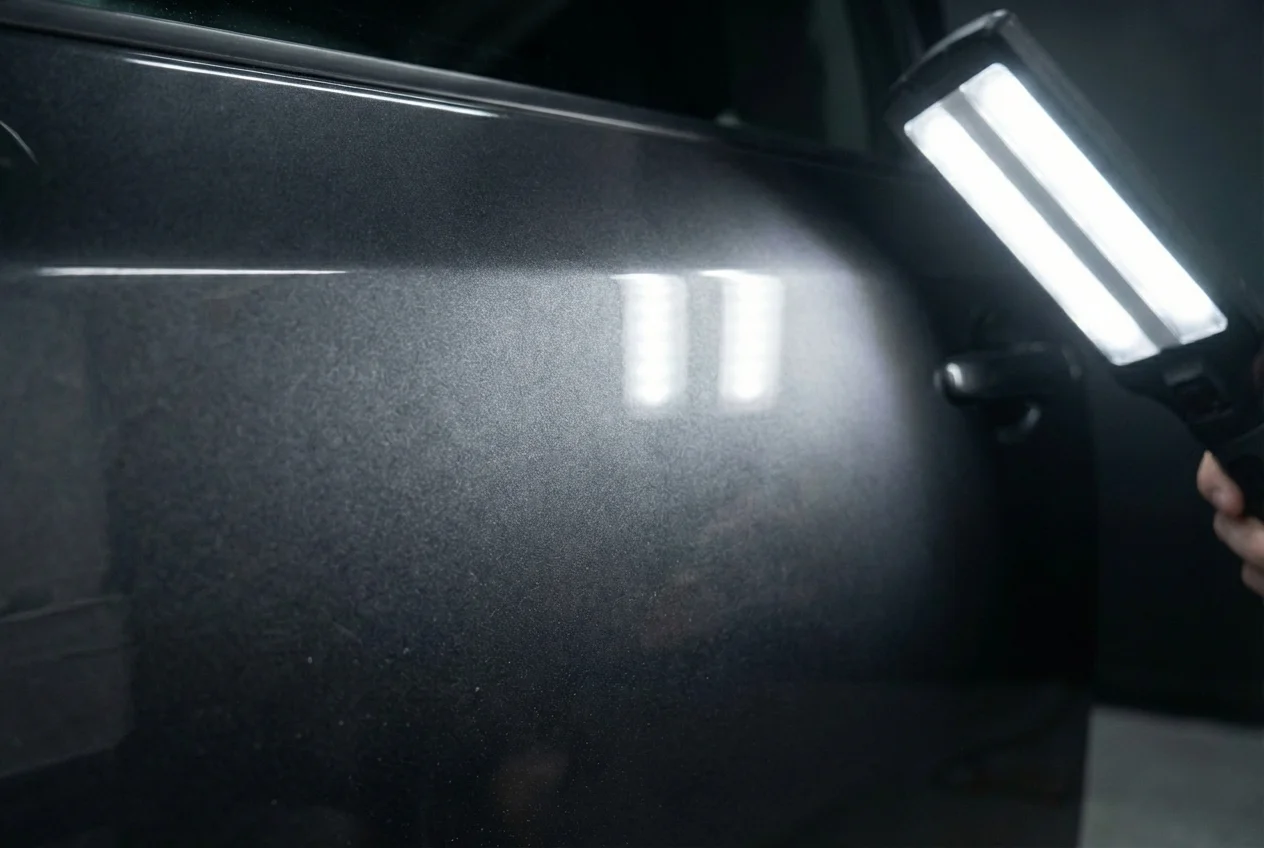
A coating does not make paint indestructible or "scratch-proof." It reduces the risk of light swirl marks but does not stop an impact, a rock chip or a careless wash. It also does not eliminate maintenance: the car still needs washing, just easier washing. And it does not correct existing defects: if the paint has scratches or holograms, the coating seals them underneath permanently — which is why correction must come first.
Why it is applied in-studio
Correct application requires clean, decontaminated, defect-free paint and curing under controlled temperature and humidity. That is why it is not a product you buy and apply on the street: the result depends as much on the preparation as on the product. Every coating we apply includes an extended warranty according to the product used.